
A DUI arrest in California puts your driver's license at risk before you ever set foot in a courtroom. The California Department of Motor Vehicles can suspend your driving privileges through a separate administrative process that moves faster than most people expect. If you do not act within 10 calendar days, the suspension becomes automatic. This guide covers exactly what happens to your California driver's license after a DUI arrest, what the DMV hearing process looks like, how long suspensions last, and what you can do right now to protect your ability to drive.
Key Takeaways
-
After a California DUI arrest, the police officer usually confiscates your physical license and hands you a pink "Notice of Suspension" that serves as a temporary driver's license valid for only 30 days. Upon DUI arrest, drivers receive a 30-day temporary license.
-
California drivers have only 10 calendar days from the date of arrest to request a DMV administrative per se (APS) hearing. Failing to request a hearing results in automatic license suspension when the 30-day temporary license expires.
-
The DMV hearing is completely separate from the criminal DUI case in superior court. DMV hearings determine if your license will be suspended; the criminal court handles guilt, fines, jail, and probation.
-
A first DUI offense with a failed chemical test typically results in a 4-month DMV suspension. A refusal of a chemical test typically results in a strict 1-year hard suspension without restricted driving options. Second and third offenses carry longer periods.
-
If you have been arrested for DUI anywhere in Los Angeles County or Orange County, call the Law Office of Mark A. Velez at (310) 701-4383 or message us online for immediate help with DMV hearings and DUI license suspension defense.
Why Your License Is at Risk Immediately After a California DUI Arrest
Under California law, a DUI arrest triggers two separate processes that can each result in a driver's license suspension. The first is the California DMV action known as the administrative per se (APS) suspension, which begins the moment you are arrested with a blood alcohol content of 0.08% or higher, or if you refuse a chemical test. Failing or refusing a chemical test leads to automatic suspension under Vehicle Code §13353.2. In California, DUI triggers two separate suspension processes: the DMV's administrative action and the criminal case filed in court.
Here is what typically happens at the roadside: the police officer confiscates your physical California driver's license, issues you a pink "Order of Suspension and Temporary License," and forwards a report along with your chemical test results to the California department of motor vehicles. That pink paper is your temporary driver's license. It allows you to keep driving for 30 days, but only 30 days.
If you do not request a dmv hearing within 10 calendar days from the date of arrest, the DMV will automatically suspend your license when that 30-day window closes. License suspension occurs 30 days after a DUI arrest if no hearing is requested. There is no grace period, no extension, and no second chance.
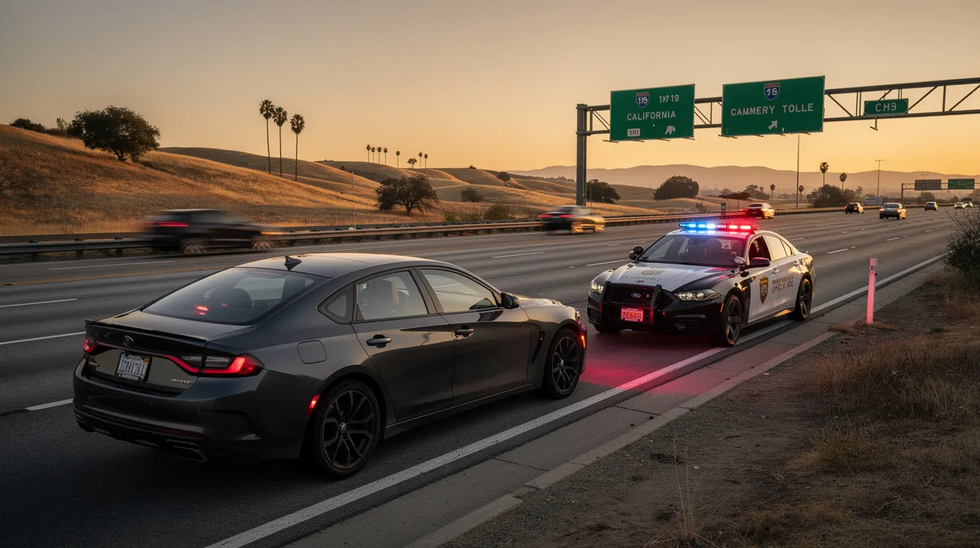
The DMV's administrative license suspension is separate from the criminal DUI charge filed in your local superior court, whether that is in Torrance, Long Beach, Westminster, or elsewhere. You face two battles. The criminal case decides whether you go to jail, pay fines, or serve probation. The DMV case decides whether you can drive. Losing one does not guarantee losing the other, but ignoring the DMV process almost always leads to a suspended license.
If you have just been released from custody after a DUI arrest, call the Law Office of Mark A. Velez at (310) 701-4383 right now. The firm can immediately contact the California DMV, request the APS hearing, and stop the automatic suspension from taking effect.
The 10-Day Deadline: Requesting a California DMV Administrative Per Se Hearing
You have 10 days to request a DMV hearing after arrest. That deadline includes weekends and holidays. If you are arrested on a Friday evening, those 10 calendar days start running Saturday morning.
The request must be made to the correct California DMV Driver Safety Office, not a regular DMV field office. For drivers in Los Angeles County and Orange County, this is usually the local Driver Safety branch. When filing the request, your attorney should also ask for a "stay" of the pending suspension, which keeps your driving privileges intact while the hearing is scheduled and held.
At this stage, a DUI attorney can request discovery from the DMV and law enforcement: the police report, chemical test records, breathalyzer calibration logs, and body cam footage if available. This discovery is the foundation for identifying whether procedures and constitutional rights were violated during the arrest.
A public defender generally cannot represent you at a DMV hearing. DMV hearings are administrative, not criminal proceedings, and fall outside the scope of public defender services. You must either represent yourself or hire private legal representation. Given that the hearing officer acts as both prosecutor and judge, having an experienced attorney matters.
Do not try to handle this alone. Call (310) 701-4383 or send a message through the firm's online contact page so the Law Office of Mark A. Velez can file the DMV hearing request on your behalf before the 10-day deadline expires.
Understanding the California DMV Administrative Per Se (APS) Hearing
An APS hearing is an administrative review conducted by a California DMV hearing officer. Its sole purpose is to decide whether to uphold, modify, or set aside a DUI-related license suspension or revocation. A DMV hearing is separate from criminal court proceedings and does not determine criminal guilt.
The DMV focuses on three specific issues at the se hearing:
-
Whether the police officer had reasonable cause to believe the driver was driving under the influence (based on driving behavior, odor of alcohol, slurred speech, field sobriety test results, or admissions of drinking).
-
Whether the driver was lawfully arrested.
-
Whether the chemical test showed a blood alcohol content at or above 0.08%, or whether the driver refused to complete a breath or blood test.
Unlike a court trial, the administrative hearing is informal. It is often held by phone or video. Evidence rules are relaxed; hearsay is frequently admitted. A single DMV employee serves as both the presenting party and the decision-maker. The recent case of Myers v. DMV (2026, California Court of Appeal) illustrates this: the hearing officer overruled defense objections to hearsay exhibits and testimony, then sustained the APS suspension based on a preponderance of the evidence.
That standard, "preponderance of the evidence," means the DMV only needs to show that it is more likely than not that the facts support suspension. This is far lower than the "beyond a reasonable doubt" standard used in criminal court. Unchallenged DMV evidence is usually enough to suspend a driver's license.
A skilled DUI attorney can attack hearsay, challenge the chemical test foundation, question whether the arresting officer followed Title 17 regulations governing breath and blood testing, and cross-examine the officer when subpoenaed. These challenges can lead to a set-aside of the suspension.
Typical California DUI License Suspension Periods (First, Second, Third Offenses)
Suspension lengths under the APS program depend on your offense history, whether you submitted to a chemical test, and whether anyone was injured.
For a first DUI offense (over 21, BAC at or above 0.08%, no refusal, no injury, no prior DUI or APS action within 10 years): the APS suspension is 4 months. A first-time DUI leads to at least 30 days without a license before a restricted license becomes available. After those initial 30 days, you may qualify for an IID-restricted or work-restricted license if you meet enrollment, SR-22, and fee requirements. A first DUI conviction through criminal court results in at least 6 months license suspension, which may run concurrently with the APS suspension.
For a second DUI offense within 10 years: the APS suspension is 1 year. A second DUI offense within 10 years can cause a 1-year to 2-year suspension depending on criminal court orders. Second DUI offenses can lead to a one-year license suspension under APS alone, with limited restricted driving options tied to IID installation and court compliance.
For a third or subsequent offense within 10 years: suspensions or revocations of 2 to 3 years are common, and options for restricted driving become increasingly limited. A three year suspension or revocation is possible for drivers with multiple prior offenses.
The 10-year "washout period" matters here. California uses a look-back window: prior DUI convictions or APS actions within the previous decade turn a new DUI charge into a multiple-offense case with harsher DMV consequences. Consequences of a DUI can include license suspension or revocation, and enrollment in a DUI education program.
These DMV actions are separate from what the criminal court may order. A reduced court charge (like a "wet reckless" or reckless driving plea) still leaves an APS suspension in place unless the DMV hearing is also won.
Example: A Los Angeles County driver arrested in 2026 with a 0.10% BAC and one prior DUI from 2019. That prior falls within the 10-year window. Under APS, this qualifies as a second offense: a 1-year suspension. The criminal case may add concurrent or additional suspension time depending on the dui conviction terms.
Because each DUI case is fact-specific, consult directly with the Law Office of Mark A. Velez at (310) 701-4383 for a personalized suspension timeline and strategy based on your driving record.
Refusals, Injury DUIs, and Commercial Licenses: When the Stakes Are Even Higher
Refusing a post-arrest breath or blood test in California triggers mandatory hard license suspensions under Vehicle Code §13353. A first DUI offense with a chemical test refusal results in a 1-year hard license suspension. Refusing a chemical test leads to a one-year license suspension with no restricted license for that entire year. Repeat offenders who refuse face even longer periods, sometimes 2 to 3 years.
DUI with injury (Vehicle Code §23153) can lead to longer DMV suspensions or revocations. The IID Pilot Program (effective 2019 through 2032) requires all injury-involved DUI offenders to install an ignition interlock device. When someone other than the driver contributed to injuries or was seriously hurt, restricted license options shrink or disappear entirely.
Commercial drivers face distinct consequences:
-
A first DUI offense, even in a non-commercial vehicle, can cause a 1-year loss of commercial driving privileges (Class A or B CDL). The BAC threshold for operating a commercial motor vehicle safely is 0.04%, lower than the standard 0.08%.
-
A second DUI offense often results in a lifetime commercial disqualification under California and federal rules.
Underage DUI results in a one-year license suspension under California's Zero Tolerance law. Drivers under 21 who take an alcohol screening (PAS or chemical test) showing a BAC of 0.01% or higher face a separate APS suspension of one year. If they refuse, the suspension period increases.
If you drive for a living as a truck driver, rideshare driver, delivery worker, or sales representative, your livelihood depends on defending both the DUI charge and the APS suspension. Contact the Law Office of Mark A. Velez at (310) 701-4383 or through the firm's online form for urgent help.
How the Law Office of Mark A. Velez Fights Your DMV License Suspension
Mark A. Velez brings over three decades of combined law enforcement and criminal defense experience to every DUI and DMV hearing. He has served in every rank from police officer through Chief of Police, giving him an insider's understanding of arrest procedures, field sobriety testing, and the policies that govern how officers handle drunk driving investigations.
The firm's step-by-step approach to DUI defense includes:
-
Immediately contacting the California DMV within the 10-day window to request the APS hearing and a stay of the automatic license suspension.
-
Obtaining and analyzing police reports, body-worn camera footage, breathalyzer maintenance and calibration logs, blood test records, and urine test documentation where applicable.
-
Identifying constitutional errors, lack of probable cause, field sobriety test mistakes, or violations of Title 17 that can undermine the DMV's case.

Mark's background in policing policies, investigations, and internal procedures allows him to spot errors in officer training, arrest protocols, and test administration that many lawyers and self-represented drivers overlook. His academic credentials include a Ph.D. in Public Administration from USC, an M.P.A. with honors from CSU Dominguez Hills, and a J.D. with honors from Southwestern Law School. He teaches criminal procedure at multiple universities.
The firm represents clients throughout Los Angeles County and Orange County, including Torrance, Long Beach, Inglewood, Compton, Santa Ana, Westminster, and nearby cities in southern California. Call (310) 701-4383 to schedule a confidential consultation so the firm can begin building a tailored DMV and DUI defense strategy.
DMV Hearings vs. DUI Court: Two Separate Battles
A California DUI arrest triggers two different proceedings. The criminal case is handled in superior court, where jail, fines, probation, and other criminal penalties are decided. The administrative case at the California DMV focuses solely on whether the driver's license should be suspended or revoked. The other suspension process is a criminal conviction penalty through the court.
Winning one does not automatically win the other. A court reduction to reckless driving may not lift the APS suspension. And winning the DMV hearing does not guarantee dismissal in criminal court. Administrative and court suspension periods may run concurrently in some situations, but they are governed by different statutes and different standards of proof.
Criminal courts apply the "beyond a reasonable doubt" standard. A judge, and sometimes a jury, decides guilt. DMV hearings use a "preponderance of the evidence" standard, and the outcome is decided by dmv employees who serve as hearing officers. DMV officials review the officer's report and test results; if no one challenges that evidence, the suspension stands.
Because a public defender cannot appear at DMV hearings, hiring a private DUI attorney is often the only realistic way to fight the administrative license suspension. The Law Office of Mark A. Velez routinely handles both the dmv hearing and the criminal DUI case together, coordinating strategies so testimony and evidence in one forum do not harm the client in the other.
Negligent Operator Points and Non-DUI License Suspensions
California's negligent operator treatment system is based on negligent operator points. Drivers accumulate points for traffic violations or accidents. A DUI conviction carries 2 points. A speeding ticket or traffic ticket for a moving violation adds 1 point. An at-fault collision also adds 1 point.
Too many points trigger a negligent operator hearing with the DMV:
-
4 points in 12 months (four points in one year triggers a negligent operator hearing)
-
6 points in 24 months
-
8 points in 36 months
Single point additions clear after three years from the violation date. But accumulating 4 points in a year may trigger a negligent operator hearing before those points age off. Negligent operator points affect car insurance rates, often increasing premiums for years.
At a negligent operator hearing, the driver or their attorney can challenge whether the negligent operator points were properly assessed, present proof of safe driving since the violations, and request alternatives like probationary status instead of a full driver's license suspension. A negligent operator designation can result in a specified period of suspension that compounds any DUI-related suspension already in effect.
Anyone who has received a negligent operator letter or hearing notice from the California DMV should contact the Law Office of Mark A. Velez for legal representation to protect their California driver's license and driving record.
Steps to Take Immediately After a DUI Arrest to Protect Your License
Time is your most limited resource after a DUI arrest. Here is a chronological checklist:
-
Secure and read the pink "Notice of Suspension/Temporary License." Confirm the date of arrest and calculate the 10-day hearing deadline. That paper is your temporary driver's license for 30 days from the date of the initial reporting of the arrest to the DMV.
-
Write down everything you remember. The stop, what the police officer said, which field sobriety tests were given, how the chemical test (breath, blood, or urine test) was administered, and any observations about the officer's behavior. Details fade quickly.
-
Do not post on social media or admit guilt to insurance companies. Anything you say can be used against you in both the criminal case and the administrative hearing. Avoid driving if any restrictions apply to your suspended license status.

The next step is to contact an experienced attorney who handles DUI cases so they can request the DMV hearing, demand discovery, and begin investigating weaknesses in the state's case.
Gather relevant documents: prior court records, proof of employment, medical records if you have a medical condition or physical or mental condition that could explain poor driving or test results, and any witness contact information. If a mental condition or other health issue affected your performance on field sobriety tests, that evidence can be relevant at both the DMV hearing and in criminal court.
Do not ignore court dates or DMV mail. Failure to appear or respond can lead to additional license suspensions and bench warrants from the criminal court.
Call the Law Office of Mark A. Velez at (310) 701-4383 or reach out via the firm's online contact form the same day you are arrested, if possible, to maximize your chances of keeping your driver's license.
Restricted Licenses, Ignition Interlock Devices, and License Reinstatement
California drivers can sometimes keep limited driving privileges after a DUI suspension through two primary paths:
-
Work/school-restricted license: After serving a minimum suspension period (often 30 days for a first offense), eligible drivers can apply for a restricted license that permits driving to work, school, or a DUI education program during a specified period.
-
IID-restricted license: Installing an ignition interlock device allows nearly full driving privileges in many first and second offense cases. Under the IID Pilot Program (running through December 31, 2032), eligible first-time offenders can sometimes avoid serving any hard suspension period by installing the device immediately.
License reinstatement generally requires satisfying all applicable DMV requirements. Mandatory steps for reinstating a license after a DUI include completing a DUI education program and filing an SR-22 (proof of financial responsibility with your car insurance company). You must also pay required DMV reissue fees to have driving privileges restored after a DUI. Installing an ignition interlock device is often a requirement for reinstatement after a DUI, with calibration checks every 60 days. Complete the court or DMV-mandated DUI education program to reinstate driving privileges.
Refusal suspensions, certain injury DUIs, and some commercial license actions eliminate or limit eligibility for restricted driving, which is why contesting the original suspension is so important. A driver commuting from Torrance to downtown LA, or from Garden Grove to Irvine, cannot afford a gap in driving privileges.
The Law Office of Mark A. Velez not only defends against suspension but also guides clients through applying for restricted licenses or full reinstatement once they become eligible.
Medical, Age-Related, and Fitness-to-Drive DMV Hearings
The California DMV can suspend or revoke a license when it believes a driver has a physical or mental condition that makes operating a motor vehicle safely impossible. This includes seizures, dementia, severe diabetes, and vision impairment.
Law enforcement officers, physicians, or family members may trigger a re-examination or "medical review" process. Older drivers in southern California sometimes face retests or additional scrutiny if the DMV receives reports of confusion, accidents, or difficulty operating a vehicle. But every driver has the right to an administrative hearing before the DMV takes final action.
An experienced lawyer can help gather medical records, obtain letters from treating physicians, and prepare the driver to show dmv officials they remain safe behind the wheel, possibly with conditions (corrective lenses, daylight-only driving) instead of full suspension or revocation.
The Law Office of Mark A. Velez approaches these hearings with sensitivity, balancing safety concerns with seniors' need for independence. Call (310) 701-4383 for guidance.
Appealing or Challenging an Adverse DMV Decision
If the DMV hearing officer upholds a DUI-related license suspension, the driver still has limited options to challenge the decision.
You have 15 days to appeal a DMV decision. An appeal can be made to the DMV (departmental review) or superior court (petition for writ of mandate). A request for administrative review costs $125 and must be filed within the deadline. Failure to appeal within 15 days results in the full suspension period locking into place.
A writ of mandate asks a judge to review whether the DMV's decision was supported by evidence and followed the law. This is a technical process that benefits from experienced legal representation; it is not a new trial but a review of the existing record.
Overturning a DMV suspension on appeal can restore driving privileges and sometimes assist in the related criminal case. But appeals are not guaranteed. If you have already lost a DMV hearing, contact the Law Office of Mark A. Velez quickly for an honest assessment of whether an appeal or writ makes sense in your specific situation.
Why Choose the Law Office of Mark A. Velez for Your DUI and DMV Case
Mark A. Velez is a Southern California native, former Chief of Police, and experienced criminal defense attorney who has worked on both sides of the criminal justice system for over 35 years. Before opening his law offices, he held every rank in law enforcement from patrol officer to chief, and he served as Acting City Manager.
His credentials include a B.S. from the University of Redlands, an M.P.A. with honors from CSU Dominguez Hills, a Ph.D. in Public Administration from USC, and a J.D. with honors from Southwestern Law School. He teaches criminal procedure and related courses at USC, CSUDH, and Pacific Coast University School of Law.
That depth of experience in law enforcement procedures, DUI investigations, and internal policies helps uncover weaknesses in DUI arrests and DMV evidence that many lawyers and self-represented drivers overlook. His understanding of how officers are trained, how they are supposed to conduct field sobriety tests, and where they cut corners gives his clients an aggressive defense grounded in fact.
Past clients on the firm's recommendations page praise Mark for strong communication, treating them like people instead of case numbers, and for outcomes that avoided jail or resulted in dismissed charges. As one client put it: "Mark got my case dismissed." Another noted: "He treated me as a human, not as a dollar sign."
If you are facing a DUI charge, DMV hearing, or driver's license suspension anywhere in Los Angeles County or Orange County, contact the Law Office of Mark A. Velez at (310) 701-4383 or through the online contact form for a free consultation.
Serving Torrance, Los Angeles County, Orange County, and Southern California
The firm serves clients in Torrance, Redondo Beach, Carson, Gardena, Hawthorne, Manhattan Beach, Palos Verdes, Long Beach, Hermosa Beach, El Segundo, San Pedro, and nearby Los Angeles County communities. In Orange County, the firm represents clients in Anaheim, Santa Ana, Garden Grove, Westminster, and surrounding cities.
While based in Torrance, California, the firm regularly appears in courts across southern California and handles DMV hearings for california drivers whose cases arise in these regions. Out-of-area clients, such as college students or professionals arrested while visiting Los Angeles or Orange County, can often have much of the DMV hearing work handled remotely by the same person who manages their criminal defense.
The sooner Mark Velez is involved, the more options there may be to keep the driver on the road legally while the criminal and DMV cases are pending.
Take Action Now: Protect Your California Driver's License
Time is critical after a DUI arrest or license suspension notice. Waiting even a few days from the date of the arrest can permanently waive your right to a DMV hearing and lock in a suspension. The clock starts running the moment you receive that pink slip, and it does not pause for weekends or holidays.
Do not assume the situation is hopeless, even if your BAC was high or you have prior offenses. Legal and procedural errors are common in DUI arrests, and they can be used to your advantage with the right experienced attorney. An aggressive defense built on facts, not hope, is how suspensions get set aside.
Call the Law Office of Mark A. Velez at (310) 701-4383 right now for a confidential DUI and DMV case review. If you prefer not to call, submit your details through the secure contact us form so the office can respond quickly. Preserving the ability to drive is often the first, most important step in protecting your job, your family, and your future.
Frequently Asked Questions About California DUI License Suspension
Can I still drive after a DUI arrest in California?
Most drivers can legally drive for up to 30 days using the pink "Notice of Suspension/Temporary License" issued at the time of arrest, as long as they had a valid license before the stop and no other suspensions were in place. If a DMV APS hearing is requested within 10 days from the date of the arrest, the suspension is usually "stayed" and the driver can continue driving until the hearing decision, subject to any court-imposed conditions. Driving after the 30-day period without a stay or valid license can result in a new criminal charge for driving on a suspended license.
What happens at a DMV APS hearing if I refused the chemical test?
In a refusal case, the DMV focuses on whether the police officer properly advised the driver of the serious consequences of refusing and whether the driver actually refused to complete a blood test or breath test after being lawfully arrested. A refusal of a chemical test typically results in a strict 1-year hard suspension without restricted driving options for a first offense. An experienced attorney can sometimes challenge whether the conduct truly amounted to a refusal, for example if equipment problems, confusion, or a medical condition prevented completion.
If my DUI charge is reduced or dismissed in court, does that cancel the DMV suspension?
The DMV process is independent. A court reduction to reckless driving or even a full dismissal does not automatically cancel an APS suspension that has already been imposed. In some situations, such as when the case is not filed at all, an attorney may request a new DMV hearing or present the court outcome to seek reinstatement. The rules are technical and time-sensitive, so consult a DUI attorney before plea negotiations so that court strategy accounts for DMV consequences.
Do I need a lawyer for a DMV hearing, or can I handle it myself?
Drivers are allowed to represent themselves, but DMV hearings are evidentiary proceedings with rules about documents, witnesses, and objections that can be difficult for non-lawyers to navigate. The hearing officer is not a judge and does not represent the driver. Instead, the same person both presents the DMV's case and decides the outcome, making it critical to know how to challenge the state's evidence. Hiring an experienced attorney like Mark A. Velez improves the chances of avoiding or shortening a license suspension and can also benefit the related criminal case.
How much does it cost to fight a DUI license suspension in California?
Costs vary based on case complexity: injuries, prior DUIs, refusal allegations, and whether both the DMV hearing and court case are contested through trial. The Law Office of Mark A. Velez offers individualized case evaluations and works with clients to develop a cost-effective defense plan, often far less expensive than the long-term impact of losing the ability to drive or suffering a DUI conviction on your record. Call (310) 701-4383 or use the online contact form to discuss fees, payment options, and the value of fighting your specific DMV and DUI matters.


Comments
There are no comments for this post. Be the first and Add your Comment below.
Leave a Comment